It all began with the import of herring

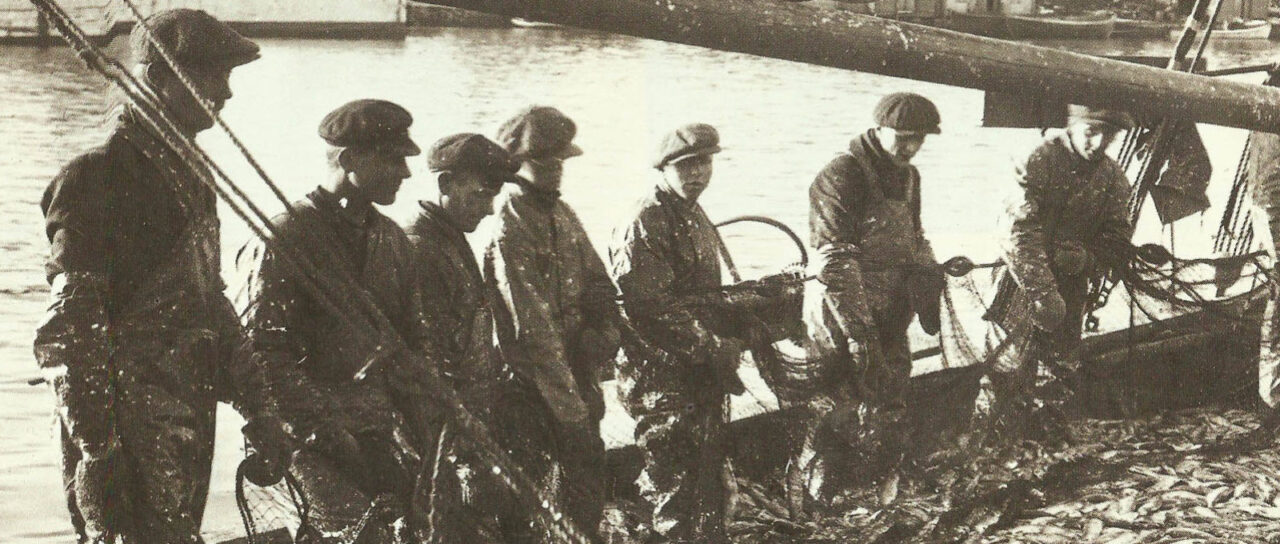
In many ways, Berner has brought the world to Finns. Our story began in 1883 with the import of herring. Over the years, our selection has expanded from food products to well-known international consumer and professional products, as well as raw materials.

1883: Berner’s story begins in Finland

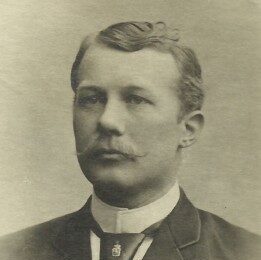
The story of Berner Ltd began when the Norwegian Sören Berner arrived in Helsinki in the 1880s to study the market of the city of 40,000 inhabitants. He decided to start a business in Finland by importing herring directly from the fishing grounds of Stavanger, Norway, to Helsinki.

Sören was born in 1859 into an old Norwegian family of craftsmen and merchants, and he had thorough, first-hand experience of selling herring from his home background.

Sören rented an office room at Eteläranta 6, and he acquired the right to conduct business on 28 July 1883. The beginning was quite modest, and the young merchant handled the sales, travel and bookkeeping himself.

Turn of the 20th century: The agency business is born

As its customer relationships expanded, Berner broadened its wholesale trade with other fish products. The grain trade reached a significant position in the company’s operations already from the 1890s onwards. Berner was among the first to begin importing wheat flour from the United States.

Alongside salt, grain and fish products, Berner also imported rarer delicacies such as marzipan, liquorice and raisins.

1920s-1930s: Exports grow and crop protection products enter the market

Export trade began to gain greater significance: paper was exported to African countries and Singapore, cheese to Germany, and plywood to London and Hamburg. A significant expansion was the opening of direct connections with Brazil, making Berner a pioneer of coffee importing in Finland. For example, Paulig bought its coffee through Berner.

The growing pace of trade was also reflected in the establishment of specialised departments, the first of which were the chemicals and food department and the textile agency department. Subsidiaries were established in New York and Hamburg.

As agriculture developed, imports were expanded to include fertilisers, among other things. In the 1930s, Berner was the first to offer crop protection products to Finns, and farmers needed extensive guidance in their use.

1940s: The war years and social responsibility

The effects of wartime rationing were felt in Finland for a long time. Berner met the growing demand by importing goods such as potato flour, corn starch, glycerine and canned meat. Veterinary medicine also joined the business and, in the following decades, expanded into other hospital supplies and laboratory equipment.

In the 1940s, the company began sharing a portion of its profits with the entire staff and investing in employee wellbeing. Its progressive measures included occupational health services and dental care. Employees had every other Saturday off on alternating weeks, and a three-week summer holiday was introduced.

1950s: The first factory in Helsinki

In the 1950s, Berner contributed to post-war reconstruction by acquiring its first cosmetics representations, among other things.

As part of the war reparations to the Soviet Union, the company delivered lubricating oil that had been developed at its new factory, which opened in 1952 in Herttoniemi, Helsinki. The first product from Berner’s own product development was the XZ hair oil treatment.

A striking new venture was the establishment of the company’s own car department, and Berner acquired the representation of Chrysler, among others.

At the beginning of the 1950s, the company had around sixty employees.

1960s-1970s: Production and operations expand

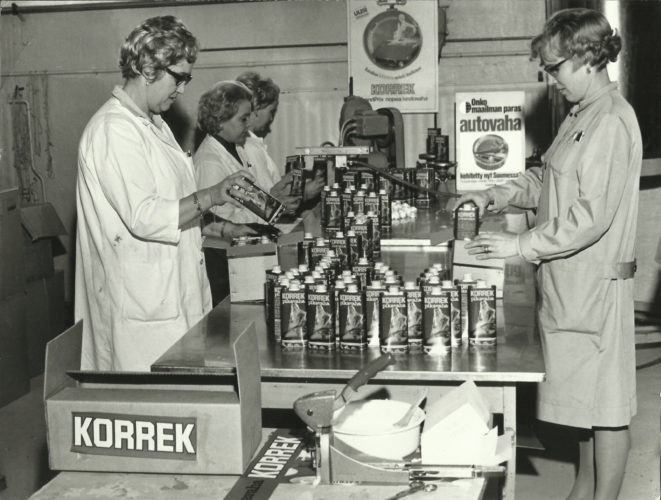
In-house production got off to a fast start and expanded during the 1960s from hair care to car care products, following the company’s move into car imports. As a result of Berner’s own product development, the Korrek car care range was launched on the market.

Operations were extended into the trade of hospital equipment and supplies. Sports, forklift and food departments were established. Sales of Eva sewing machines began, and they found their way into Finnish homes at a time when the country was troubled by the oil crisis and recession.

1980s-1990s: The first acquisitions and expansion into the Baltics

In the 1980s, Berner entered the professional catering cleaning sector, and its investment in the hospital equipment trade continued. In the 1990s, Berner acquired Alko’s technical chemistry operations, such as Lasol, and through the acquisition of Sareko Agro Oy’s business, Berner grew into the country’s leading crop protection company.

In the 1990s, the company also acquired the business of Bergenheim Companies (Instrumentarium), including its factories. In the late 1990s, Berner established a subsidiary (Berner Eesti OÜ) in Estonia, whose operations later expanded into Lithuania and Latvia.

2000s: Acquisitions and a factory in Heinävesi

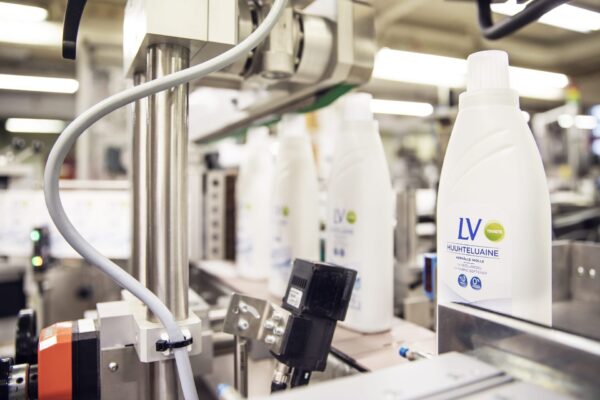
The 2000s were a time of significant acquisitions. Berner acquired well-known brands such as Nokian Jalkineet (Nokian Footwear), LV sensitive skin products, the Herbina hygiene range, the Rajamäki vinegar business, and the Grow How business, which was later renamed GreenCare.

From Sweden, Berner acquired Gullviks, a wholesale company for crop protection products, which later merged with Bröderna Berner Handels AB.

The Heinävesi technical chemistry factory was acquired from the Norwegian Reidar Jakobsen, and in 2001 the production of water-based hygiene products was transferred there from the Herttoniemi factory.

In 2008, the company decided to consolidate all of its logistics operations into a new logistics centre in Viinikkala, Vantaa. The logistics centre was taken into use in January 2009.

Early 2010s: New factories in Heinävesi

One of the largest investments in Berner’s history was completed in 2014, when new factories were opened in Heinävesi, where the production of Rajamäki vinegars was also relocated.

That same year, Berner acquired the Lithuanian company Kruzas Nordic Cosmetics Distribution. With this acquisition, Berner became one of the leading importers and distributors of cosmetics in the Baltic countries.

From 1987 to 2013, the company’s Managing Director was George Berner, the great-grandson of Berner Ltd’s founder, Sören Berner. When George Berner retired on 1 September 2013, the Board of Berner Ltd appointed a new Managing Director: board member Antti Korpiniemi, Director of the Crop Protection and Gardening Department.

Late 2010s: Acquisitions continue

The end of the decade was a busy period in terms of acquisitions. Berner acquired the business of Ordior Oy, a company specialising in the sale and import of laboratory equipment and formerly part of the University Pharmacy group, in both Finland and Estonia.

In 2017, Berner made a fresh start at a new head office. The new, modern premises were completed in Herttoniemi, Helsinki.

With the acquisition of Make-Trade, the portfolio gained more well-known brands, such as the French brand BIC.

In 2018, the company celebrated 135 years of operation. It was also an anniversary year for Berner’s iconic rubber boot brands, as Nokian Saappaat (Nokian Footwear) turned 120 and Hai turned 50.

Berner acquired the magnesium chemicals manufacturer Catrock Oy and the operations of its subsidiary based in Kokemäki. The new subsidiary, Berner Chemicals, would go on to further develop the production of magnesium products in Kokemäki, complementing the service offering of Berner’s Industry division.

2020s: The pandemic and growth

In spring 2020, in response to the coronavirus pandemic, ten times the usual volume of disinfection products was manufactured in Heinävesi. In line with its strategy, Berner also pursued growth through ten acquisitions in 2021-2022, strengthening its position in all four business areas: consumer products, healthcare and laboratories, agriculture, and industry. The Machinery business was divested in 2021.

Berner acquired a stake of approximately 8% in the listed company Apetit Plc, as well as the fertiliser company Belor Agro. Through the acquisition of Apetit’s grain trade business, Berner took over the domestic grain trade operations, along with grain storage facilities and port operations in Finland.

With the acquisition of an 85% stake in Chemigate, Berner’s role as a significant and long-term partner to industry grew. 

Chemigate acquired a majority of the voting rights in Finnamyl, Finland’s leading manufacturer of potato starch products.

Berner’s position in health technology products was strengthened when the company acquired 90% of Suomen MediTuote, the Swedish company Doleman, the Finnish Haltija Group, and the Swedish company ClaraLab.

The acquisition of Naviter Oy, a manufacturer of skin and hair care products, strengthened Berner’s position in the cosmetics market.

With the acquisition of Voda Nordic Oy in 2025, Berner strengthened its offering in water treatment for municipalities and industry.

The Berner Group has grown into a company with a staff of 880 people.